The result should read as part of the original work.
What happened
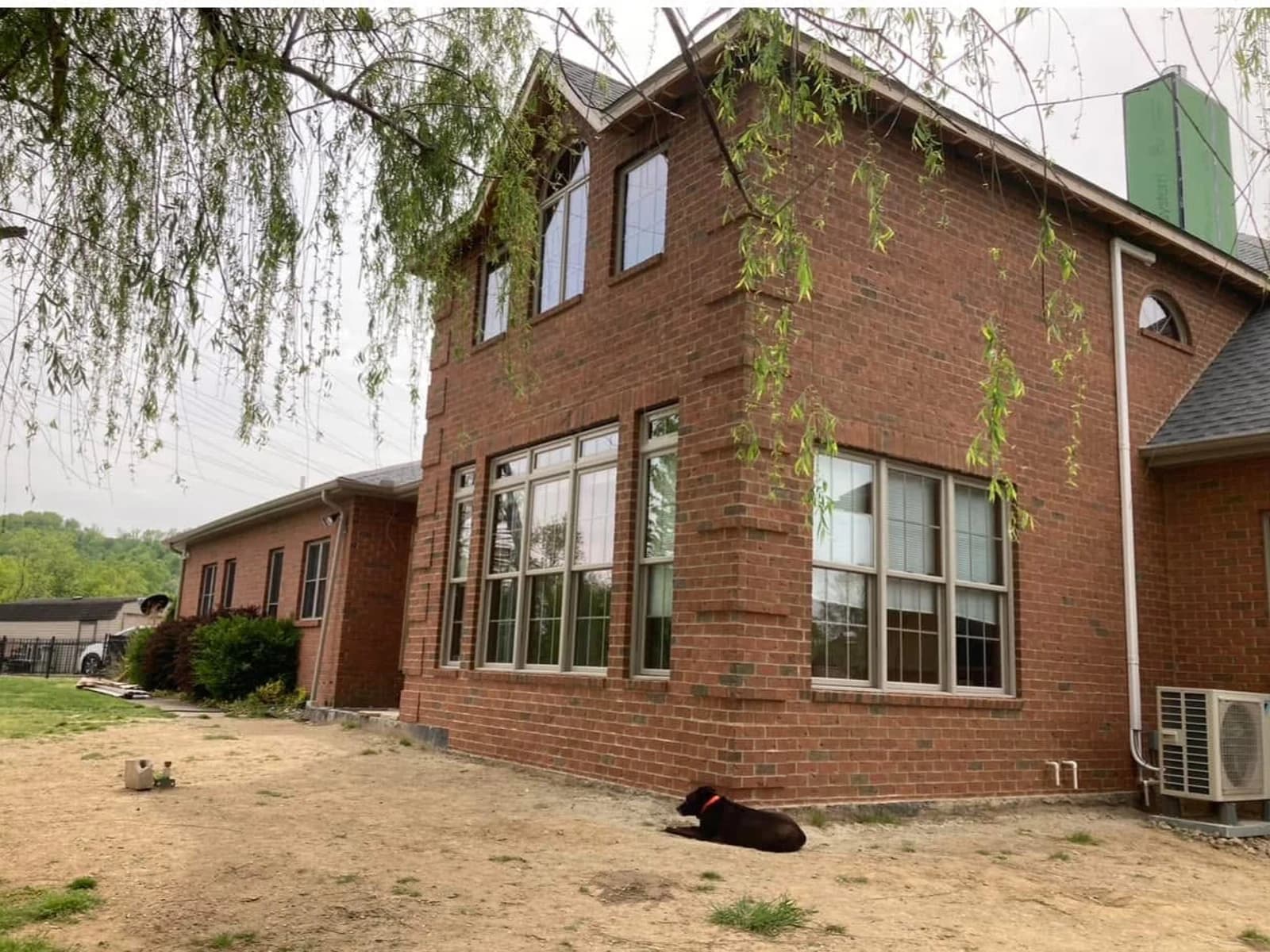
The original home was not one flat red. Its walls included lighter and darker bricks that created a natural pattern, while the newly built addition began as a much grayer field.
MCC’s color work
MCC worked with the builder before the color stage. The mason placed selected lighter and darker bricks through the addition so MCC had the variation needed to recreate the character of the original walls. Once the masonry work was finished, MCC mixed and applied the red color family across the new brick.
Finished result
The addition keeps visible brick-to-brick variation while relating much more closely to the warmer masonry on the existing home.
What happened
The collision damaged the wall and required masonry reconstruction. The replacement brick was structurally sound, but its light orange color made the repaired rectangle easy to see.
MCC’s color work
After the mason completed the rebuild, MCC studied the surrounding dark reds, browns, and scattered accents. Those colors were mixed and applied selectively to the new brick rather than rebuilding the wall again.
Finished result
The repaired section now sits inside the original wall’s darker variation instead of reading as one separate block of new masonry.
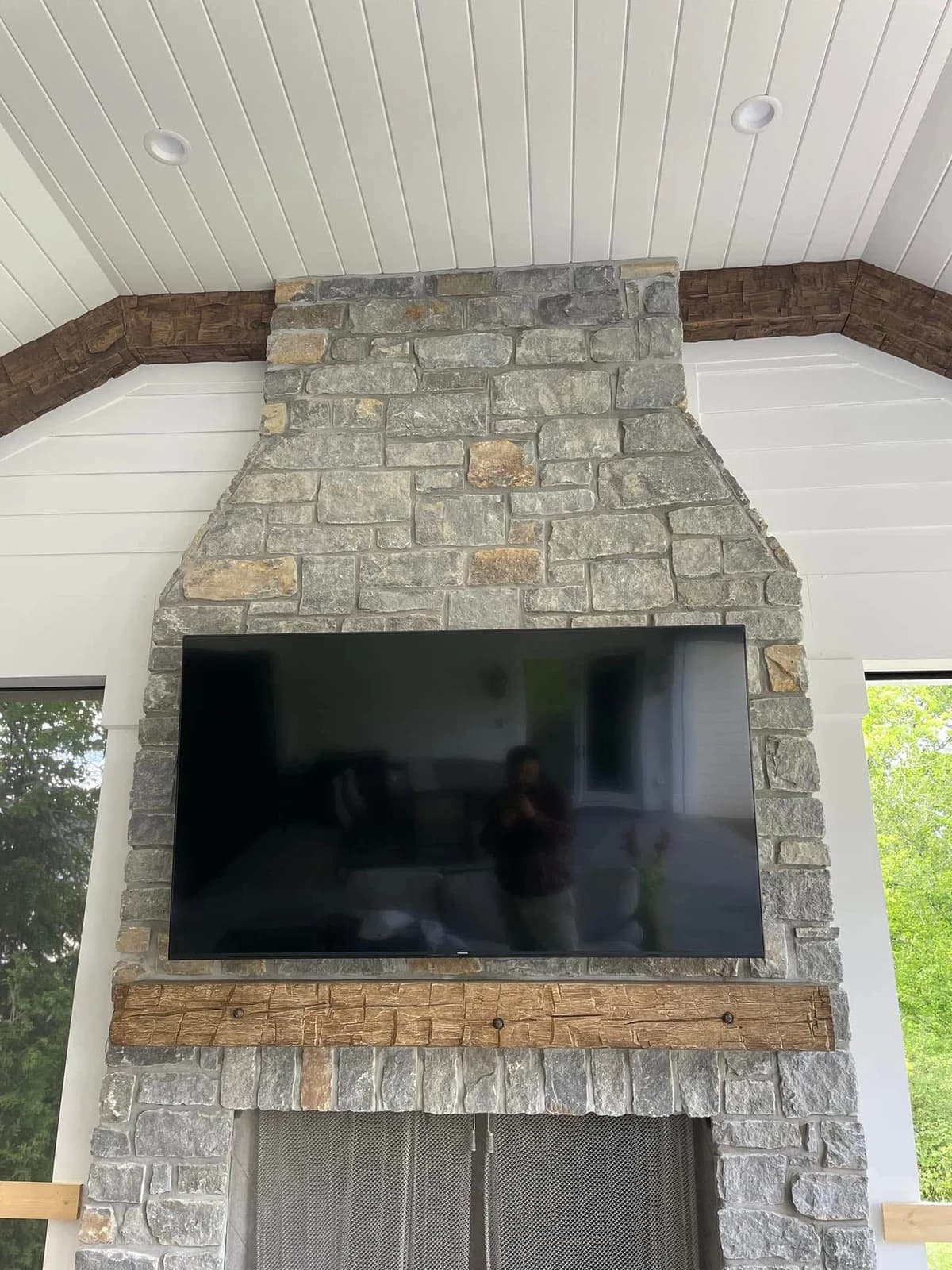
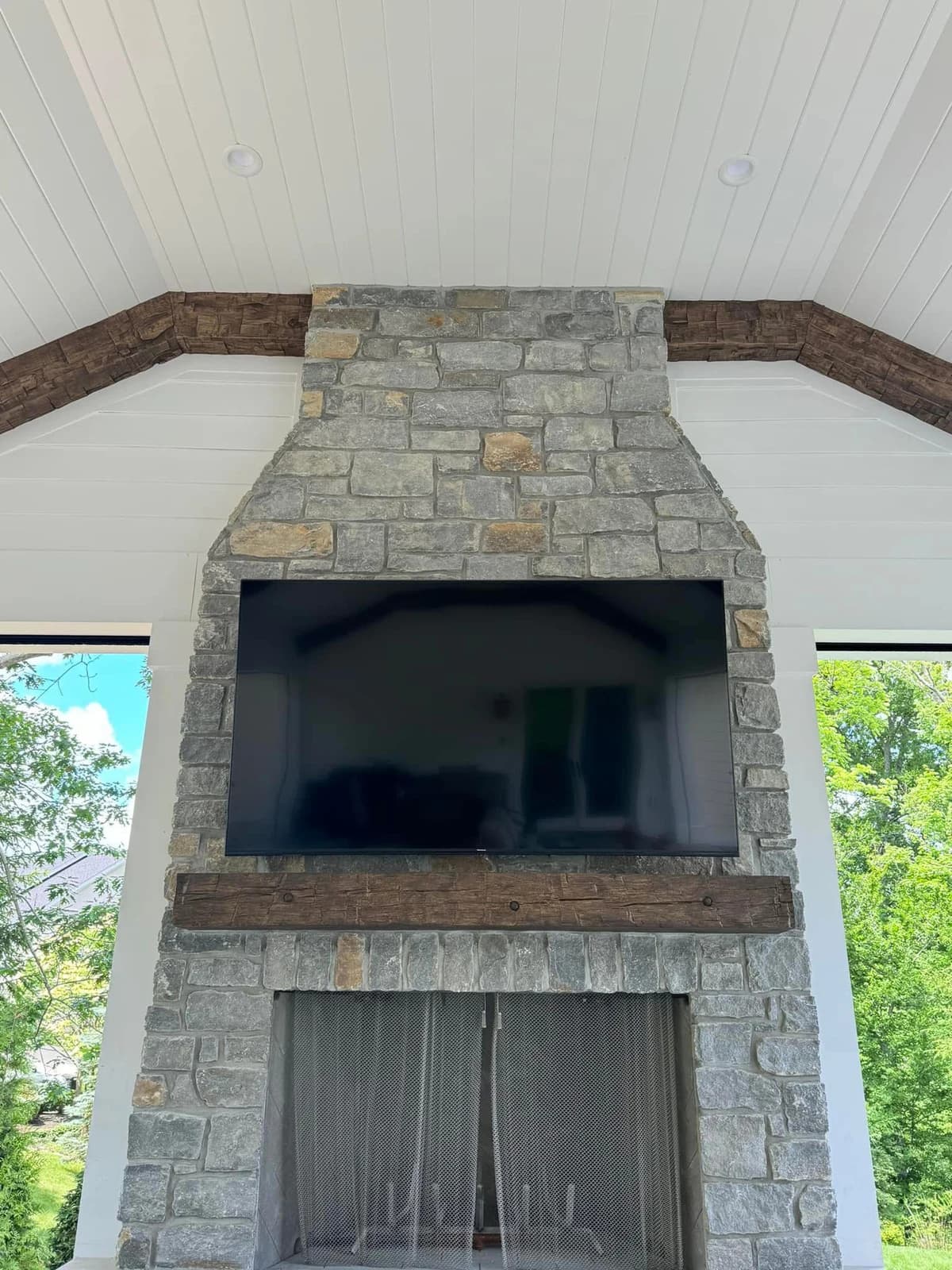
What happened
MCC worked with the factory to produce a ceramic mantel molded from an accurate wood replica. The new piece captured the shape and grain of wood, but its pale factory finish still stood apart from the darker beams already defining the room.
MCC’s color work
Using the original beams as the visual reference, MCC mixed, dyed, and layered color across the ceramic surface so the molded grain carried a convincing wood tone. The fireplace stone was left unchanged.
Finished result
The non-wood mantel now carries a wood-like tone that connects it to the room’s original beams and demonstrates MCC’s ability to solve select color problems beyond brick.
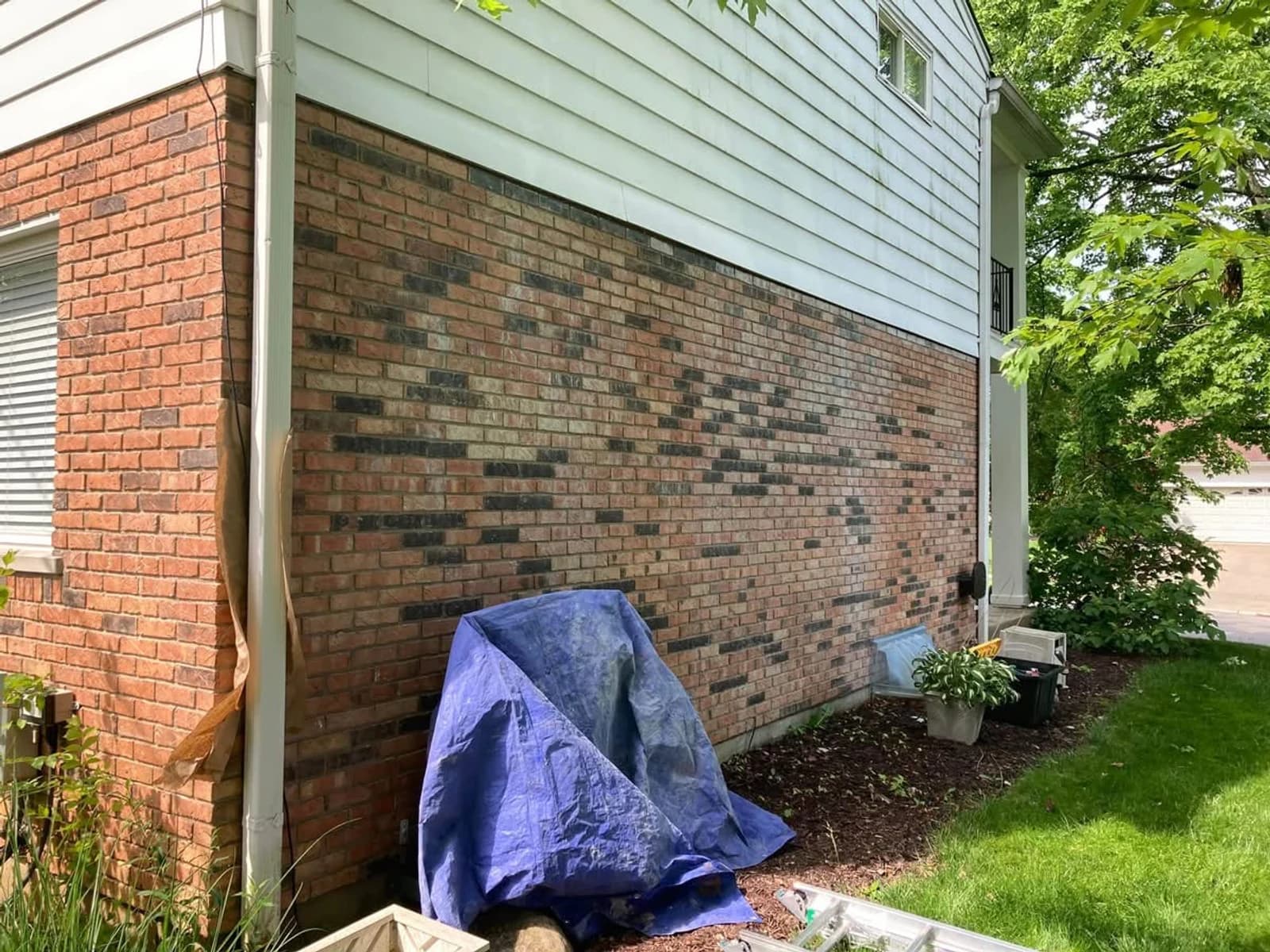
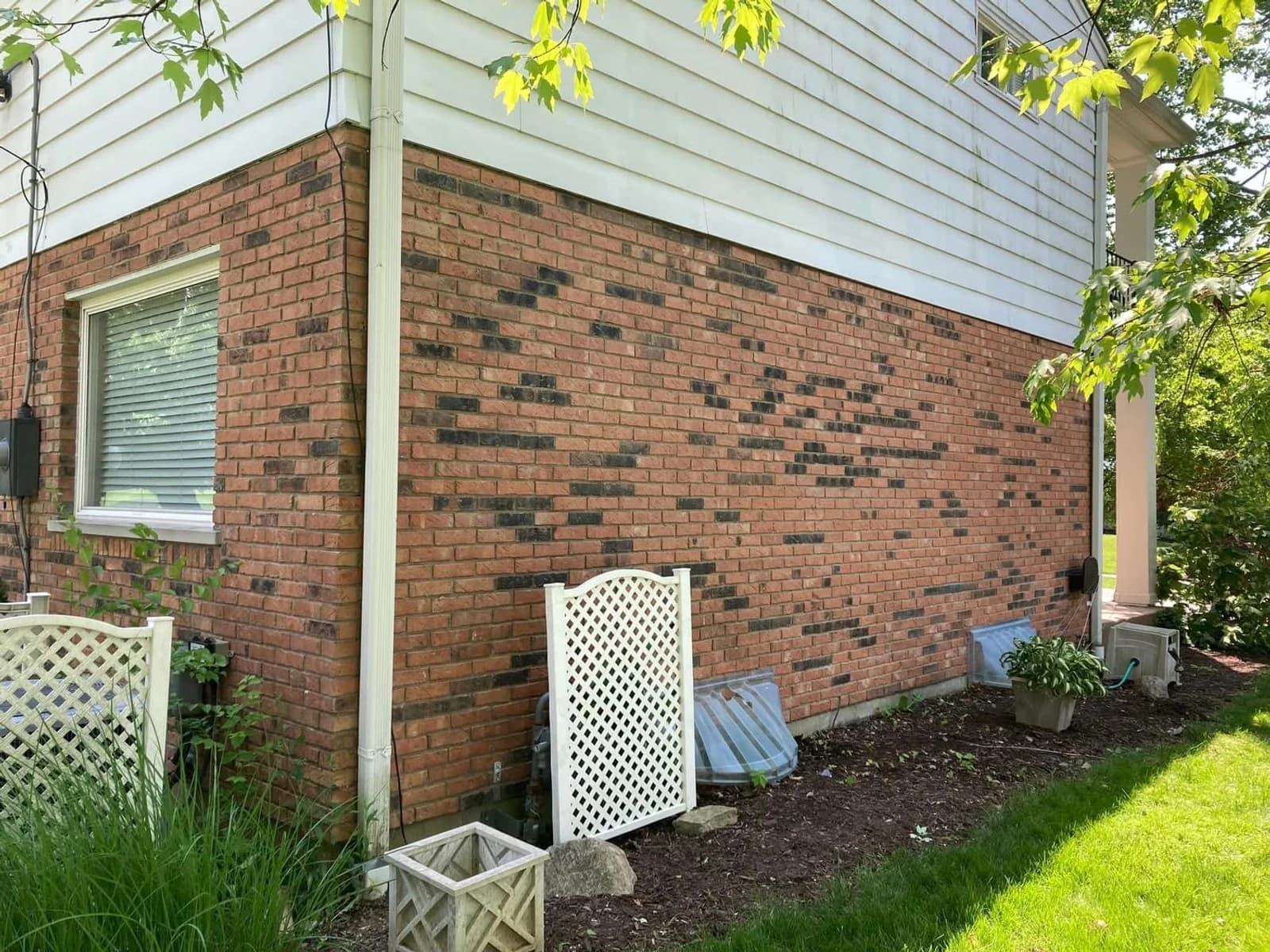
What happened
As the painted aluminum siding weathered, fine chalky pigment traveled downward during rain and discolored the brick below. This kind of coating erosion is commonly called paint chalking or chalk run-down.
MCC’s color work
Instead of treating the wall as a new construction project, MCC worked with stain colors that visually canceled the unwanted siding pigment across the affected brick faces.
Finished result
The brick reads closer to its original red field again, and the naturally darker accent bricks remain visible rather than being hidden beneath one uniform color.
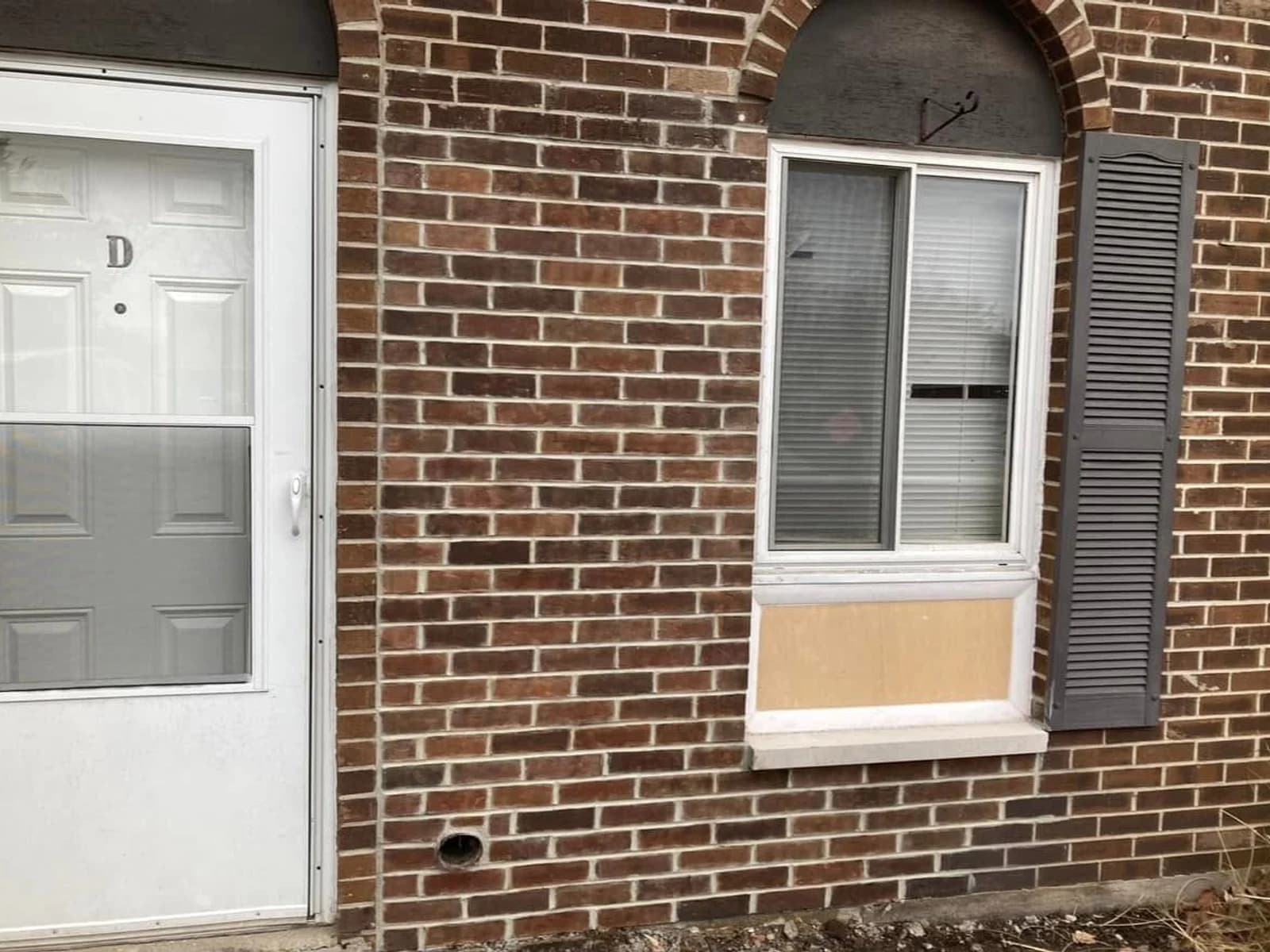
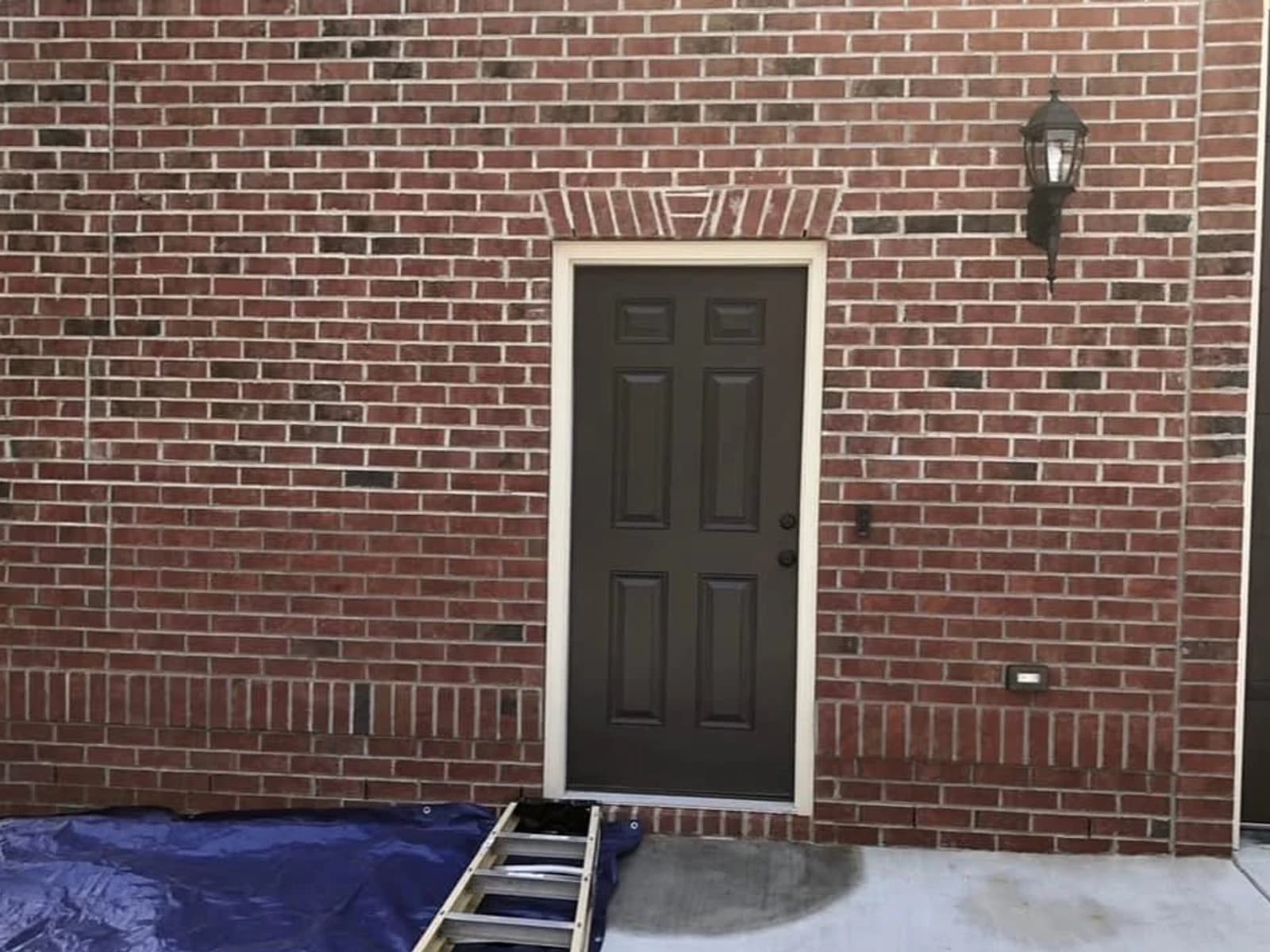
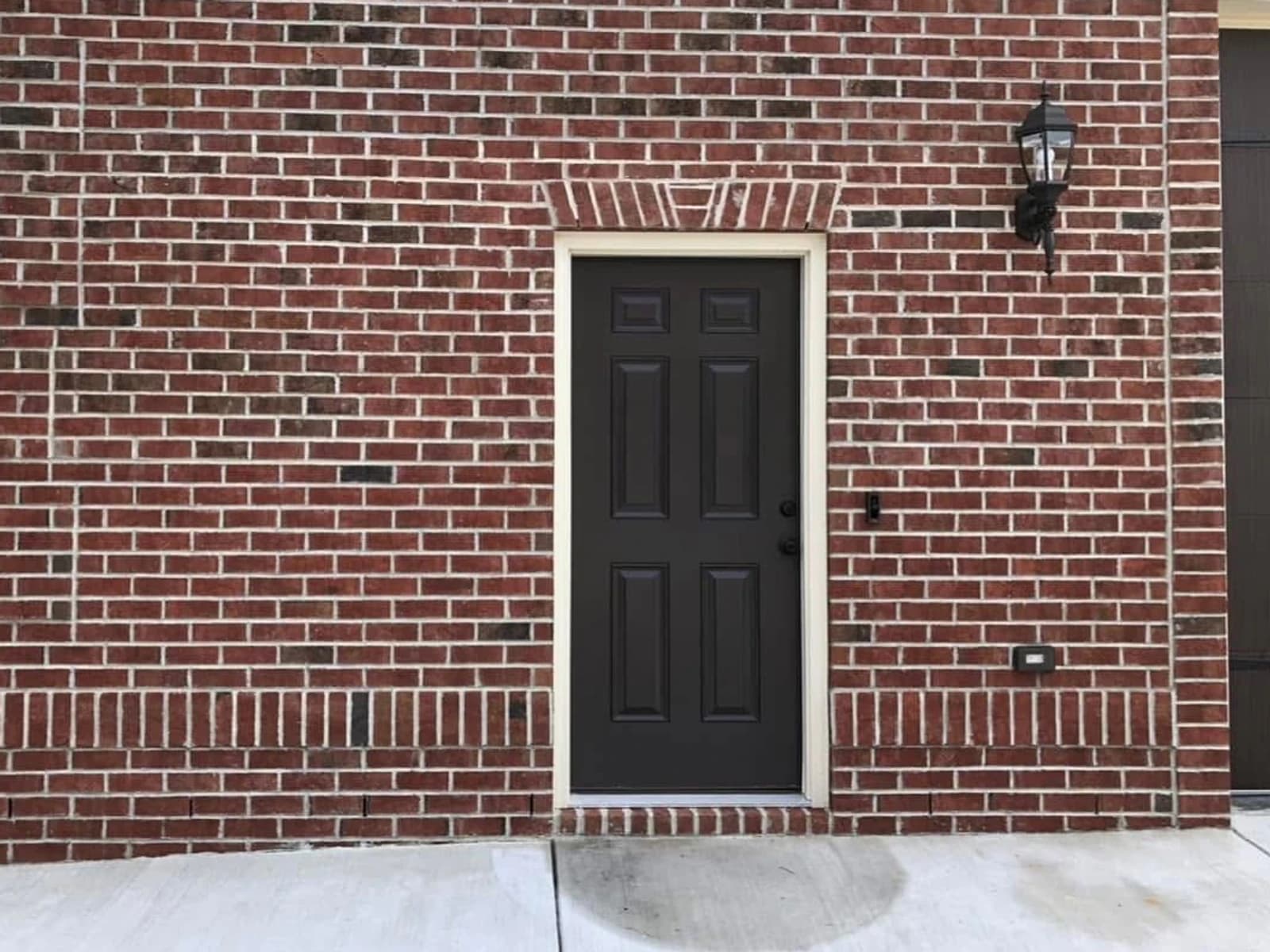
What happened
Part of the wall was built from one brick shipment and the remaining area from another. Differences between the batches—and in the surrounding mortar—made the transition noticeable.
MCC’s color work
MCC developed matching tones for both the brick faces and the mortar joints, refining the visible shift between the two deliveries without replacing the installed masonry.
Finished result
The entry reads as one connected wall, with enough natural variation left in place that the finished surface still looks like brick rather than a flat coating.
Have a mismatch like this?
Share one wide view and a few close-ups so MCC can understand the full color relationship.
Request an estimate →
 Before
 After